Ashkan Behzadi (geb. 1983) ist ein in New York lebender iranisch-kanadischer Komponist. Er erwarb seinen Doctor of Musical Arts in Komposition an der Columbia University, wo er bei Fred Lerdahl, George Lewis und Georg Friedrich Haas studierte. Davor schloss er sein Studium an der McGill University mit einem Bachelor in Komposition und Musiktheorie ab. Hier arbeitete er kompositorisch mit Chris Paul Harman und Brian Cherney zusammen. Ashkan Bezadi ist Preisträger des Academy of Arts and Letters Awards 2026, des Ernst von Siemens Kompositionspreises 2025 und Guggenheim Fellow für Musikkomposition 2021–2022.
Die Themen Genreidentität und Genregrenzüberschreitung sowie das dialektische Verhältnis zwischen modernster lyrischer Dichtung und zeitgenössischer Musik haben in den vergangenen Jahren den Kern von Ashkan Bezadis ästhetischem Anliegen gebildet. Strukturell zeichnet sich seine Musik durch große Detailgenauigkeit aus und vermittelt eine kleinformatige, zarte lyrische Landschaft. Durch den Einsatz von Techniken der Allusion und des Pastiches als Fundament sucht seine Musik letztlich die kollektive Erinnerung an Folkloremusik hervorzurufen. Im Porträtkonzert »Love Fragments« interpretieren die Sopranistin Charlotte Mundy und die Violinistin Marina Kifferstein seine Werke.

Programm, Besetzung und Werkeinführungen
Besetzung
Ashkan Behzadi, Komposition
Charlotte Mundy, Sopran
Marina Kifferstein, Violine
Programm
Love Fragments «پراکندهها از عشق»
- Man o To, Derakht o Barūn/ من و تو، درخت و بارون
- Shab-e Hamāhāngi/ شب هماهنگی
- Be Man Begū/ به من بگو
- Tan-e to/ تن تو
- Gisū/ گیسو
- Vasl/ وصل
- Dar Baste-am/در بسته ام
- Az To Sokhan Miguyam / از تو سخن می گویم
- Az Hoosh Mi../ از هوش می..
- Tan-e Barani-ye to/ تن بارانی تو
Love Fragments („پراکندهها از عشق“) besteht aus einem Zyklus von zehn Stücken, die auf zehn Liebesgedichten von Autor:innen beruhen, die wesentlich zur Metamorphose der persischen Lyrik hin zu vielfältigen modernen Formen beigetragen haben. Die ausgewählten Dichter:innen – Ahmad Schamlu, Sohrab Sepehri, Reza Baraheni, Bijan Jalali, Mohammad Mokhtari, Forugh Farrokhzad, Yadollah Royaee und Nima Yuschij – gingen jeweils einen eigenen tiefgreifenden Weg, und doch sind sie verbunden: Sie erkundeten Wege, Liebeslyrik jenseits vertrauter sprachlicher Grenzen zu schreiben – entgingen damit der politischen Zensur und Repression im Iran. So wandten sich beispielsweise nachdem von der CIA unterstützten Staatsstreich von 1953, der Irans demokratisch gewählte Regierung stürzte und den Schah wieder als Diktator einsetzte, mehrere dieser Dichter:innen Themen der Liebe und der Erotik zu. Diese Wendung ermöglichte es ihnen nicht nur, der Zensur zu entgehen, sondern auch die Grenzen der persischen Liebeslyrik in neue sprachliche und konzeptuelle Territorien voranzutreiben. Sie beflügelten über Generationen hinweg die Fantasie der iranischen Jugend, indem sie die Möglichkeit des Wandels aufzeigten – nicht immer durch explizit politische Themen, sondern durch die poetische Einbildungskraft und eine neue Sprache der Liebe, die bis heute nachwirkt.
Ashkan Behzadi ist der Überzeugung, dass es inmitten der aktuellen globalen politischen Lage – geprägt von Krieg, Gewalt gegen Geflüchtete und Migrant:innen sowie regressiver Politik, häufig unter dem Vorwand der „Rationalität" – bereits eine Form des Widerstands ist Verletzlichkeit, Zärtlichkeit und die zerbrechliche „Irrationalität" (oder schiere Vernunft) der Liebe, des Liebens und des Begehrens in den Mittelpunkt zu stellen.
Love Fragments („پراکندهها از عشق") ist den 168 Schüler:innen gewidmet, die am 28. Februar 2026 in der Stadt Minab – am ersten Tag des Krieges der USA und Israels gegen den Iran – getötet wurden, als zwei amerikanische Tomahawk-Raketen ihre Schule trafen. Dieses Stück ist diesen jungen Schüler:innen gewidmet, denen die Chance geraubt wurde, jemals selbst zu lieben.
Texte
1. You and Me and the Tree and the Rain
Ahmad Shāmlū (1925-2000)
I’m the spring, you’re the earth
I’m the earth, you’re the tree
I’m the tree, you’re the spring
The caress of your fingers of rain makes me a garden
Makes me an arch in the middle of the jungles.
You’re big, like the night
With or without the moonlight,
you’re big
like the night.
You’re the moonlight itself, you’re the moonlight
and even if the moonlight leaves and
the lonely night
has a ways yet to travel to reach the day’s gate,
like the night you’re deep and big,
like the night.
Even if the day comes,
You’re clean,
Like the dew
Like the morning
You’re like the velvet of cloud,
like the smell of grass,
you’re sheer like a muslin of mist:
a muslin of mist
that lingers confusedly on the scent of the grass,
that cannot make up its mind
between coming and going
between life and death
You’re like snow.
Even if the snow melts and the mountain goes bare,
You’re like that high, proud mountain peak
That is laughing at the clouds of darkness and at the winds of badness.
I’m the spring, you’re the earth
I’m the earth, you’re the tree
I’m the tree, you’re the spring
The caress of your fingers of rain makes me a garden
Makes me an arch in the middle of the jungles.
Translated by Saira Rafiee
2. The Night of Attunement
Sohrāb Sepehri (1928-1980)
Lips tremble, night pulses, forest breathes
What do you fear? Lead me to journey into the night of your arms
I press your nocturnal fingers, and the wind plucks the petals of a distant poppy
You glance at the forest’s canopy, the stars run in your welling eyes.
Tearless,
your eyes are incomplete,
and the dampness of the forest falls mute.
You open your hands,
the knot of darkness opens.
You smile,
the thread of mystery shudders.
You look, the eloquence of your countenance bewilders.
Let us go with the enduring road.
Reptiles are asleep
The gates of the eternity are open
Let us become sunlight
Let us forego our eyes, for the intimate moonlight has descended.
Let us lose our lips, for the voice is untimely
Let us be sipped in the trees’ dream, for the grandeur of growth passes through us.
The wind breaks, the night lies still, the forest ceases to pulse.
We hear the tears of harmony streaming, and the plants’ sap flows towards eternity.
Translated by Saira Rafiee
3. Tell Me
Rezā Barāheni (1935-2022)
Tell me, tell me
how to hear the sound of falling of a thousand leaves from the branches?
Tell me, tell me
how to hear the shooting of star from the clouds?
I was born from the tree
O, you whose speech is the sound of the breezes blowing in the leaves
tell me, tell me
who bore the tree?
The star bore me
O, you whose speech is like springs, cold springs
tell me, tell me
who bore the star?
You bore the star and the tree,
O you whose speech is like the flight of the birds
tell me, tell me
who bore you?
Translated by Saira Rafiee
4. Your Body
Bijan Jalāli (1928-1999)
Your body
is like white poplars,
an abundance of whiteness,
everlasting.
And the green leaves of thought,
fall at your feet.
O the ascent of earth
towards the sky
O the eternal union of earth and sun
Poem Translated by Saira Rafiee
5. The Tress
Mohammad Mokhtāri (1942-1998)
The tress,
I would wrap around it and
It would wrap me around
through the cells the melody would flow and the soil
would press my body to its ears grain by grain.
At times a star would lift me from the water
At times an island would weigh its boulders,
against the weight of the words rising from my throat.
I would then press my lips to the night and roar
So that the depth of this darkness would crack and a fountain would leap forth
So that it would flow the earth’s fulcrums and beam onto the void
So that it would be washed,
this slimy silhouette that has for long
fallen sideways over the bloodied garbage.
And the body would bulge out from the slit of every collar
The planets of the soul would reach further and the pupils
would beam
The dance of the universe would learn the inclination of your body
Beauty would stem from the gesture of your dress,
perch on a stone and
the stone,
from the end of the cave
would come close
to perceive its new face
Translated by Saira Rafiee
6. Connection
Forūgh Farokhzād (1934-1967)
The black of my irises,
those simple, reclusive Sufis of mine
swooned in the song-spell of his eyes.
I sensed him billow all around me,
radiating towards infinity
to the other side of life
like fire’s red pyramid,
like a cloud in spasm of rain,
like a sky embraced
by warm seasons’ breath.
I sensed that in the breeze
of his hands’ movements
the substance of my being
was disintegrating.
I sensed his heart peal inside mine
like the bell of a wandering sorcerer.
The clock took flight.
The curtain withdrew with the wind.
I had pressed him to myself
inside the halo of that fire
and I wanted to say something
but to my astonishment
his thick shadowing lashes
released themselves like silk strands
from the base of darkness
along desire’s long trail
and through the tremor
—that deathly tremor—
to the end of my end.
I sensed my release.
I sensed my release.
I sensed my skin crack from love’s dilating joy,
as my flaming mass melted slowly
and flowed, streamed and flowed
into the moon,
a turbulent blurry moon
drowned in a ditch.
We had cried into each other.
We had madly lived a moment’s
ephemeral union inside one other.
Translated by Sholeh Wolpé
7. I Have Closed the Door
Nimā Yushij (1895-1960)
I have closed the door. It is night.
To me it’s a night dark as a grave,
for while I am not very far from my love,
she is far away from me.
Throughout a night such as this,
I leave my lamp unlit.
I drain its oil;
I batter its body,
so that no one, save her, will find a clue
to my street.
To seek out from the departed train of happy times
the one bright moment where she resides,
like the scent within a flower,
I am pressed from every side,
and my body’s narrow abode has become crammed
for me.
In intimate whispers, my bleak home
begins to speak to me.
It listens to what I say, and I listen to it.
And the hushed walls
hang eagerly on every word
as we speak
and the night, cold and sullen,
looks pointedly at us.
a bewitching figure
walks secretively with slow steps
in the shadow of a breaking wall.
And the rocks, their blue surfaces covered
with crimson dots,
resting their heads upon a bed of thorns,
become eyes, and stand in wait in the way
to catch a glimpse of this figure.
And, yes, through every subtle sign,
that the night exhibits at that time,
I become accustomed to the dreary room
like the fire resigned to the harvest of black ashes.
I always leave my lamp unlit. I drain its oil,
I batter its body,
so that no one, save her, will find a clue
to my street.
Translated by Munibur Rahman
8. To Talk of You
Yadollāh Royaee (1932-2022)
To talk of you, of quietly
To talk of you, of talking to you
To talk of you, of freely
When I talk of you
I talk of the lover, of the mystical
Of I love you
Of I will
Of the thought of passing by, of alone
I with passing by your heart
I with the black journey of your eyes, is beautiful
I will live
I will carry on with longing for you
I will sing with talking of you
We gather memory from the nocturnal
We memory from escaping into remembrance
Of the pleasure of gift, in secret
We are the memory of, in whispers
I love talking of you
O the vision of quietly
I love hearing from you
Be the sparse joy of hearing
You, of likeness, of beautifully
I am thirsty for a sight, be to see
Translated by Saira Rafiee
9. I’m Fainting
Rezā Barāheni (1935-2022)
I’m fai…
You are my world
You are my clamor
I am crazy about you
you are the clamor bursting out of my heart
the gazelle fal(ling) on my chest naked
10. Your Body of Rain
Bijan Jalāli (1928-1999)
Your body of rain,
is the beginning of my hope,
and the end of my sorrow
Your body of rain,
which gives me thirst,
like water,
and coats me,
like earth.
Your body like ears
bloomed on my hands
Your body like a plant
grew in my hands
and eared and brightened
then it withered
and went dark
Now remembering you the flowers of dusk
are silent and scented
Translated by Saira Rafiee
Biographien
Ashkan Behzadi

Ashkan Behzadi (geb. 1983), Preisträger des Academy of Arts and Letters Award 2026, des Ernst-von-Siemens-Komponistenpreises 2025 sowie Guggenheim-Stipendiat für Musikkomposition 2021–2022, ist ein iranisch-kanadischer Komponist, der in New York lebt. Er erwarb seinen DMA in Komposition an der Columbia University, wo er bei Fred Lerdahl, George Lewis und Georg Friedrich Haas studierte. Zuvor hatte er an der McGill University einen Bachelor-Abschluss in Komposition und Musiktheorie erworben und dort bei Chris Paul Harman und Brian Cherney Komposition studiert. Ashkan besitzt außerdem einen Bachelor-Abschluss in Architektur von der Universität Teheran, wo er gleichzeitig Kompositions- und Musiktheorieunterricht bei Alireza Mashayekhi nahm.
Ashkans Musik wurde von verschiedenen internationalen Interpreten und Ensembles in Auftrag gegeben und aufgeführt, darunter Ensemble Recherche, TAK Ensemble, Oerknal Ensemble, Ensemble Mosaik, Yarn/Wire, JACK Quartet, Grossman Ensemble, Divertimento Ensemble, Ensemble Alternance, Ensemble UnitedBerlin, Exaudi, Ekmeles, Wet Ink, Talea Ensemble und le Nouvel Ensemble Moderne (NEM). Seine Arbeit erhielt Anerkennung durch zahlreiche Preise, Künstlerresidenzen und Festivalteilnahmen (Koussevitzky-Stiftung, Fromm-Stiftung, New York State Council on the Arts, zweiter Preis des Graham-Sommer-Wettbewerbs, Prix de Composition in Fontainebleau, MacDowell-Stipendium, Civitella-Ranieri-Stipendium, Divertimento Ensemble Composers Meeting, Dialoge-Festival der Stiftung Mozarteum Salzburg, Manifeste-Festival am IRCAM CIRMMT New Music Series).
Für das akademische Jahr 2019–2020 trat Ashkan Behzadi dem Fachbereich Musik der University of Chicago als Postdoktorand im Center for Contemporary Composition bei. Seit September 2023 unterrichtet er an der Manhattan School of Music als Dozent für Musikkomposition. Die Frage der Genre-Identität bzw. der Genre-Verwischung sowie die dialektische Beziehung zwischen modernistischer Lyrik und zeitgenössischer Musik bilden seit einigen Jahren den Kern von Ashkans ästhetischen Anliegen. Strukturell zeichnet sich seine Musik durch große Detailtreue aus und vermittelt eine miniaturiartige und sanfte lyrische Landschaft. Indem er Techniken der Anspielung und des Pastiches als Grundlage seines Schaffens nutzt, zielt seine Musik letztlich darauf ab, die kollektive Erinnerung an Volksmusik zu wecken.
Marina Kifferstein

Marina Kifferstein ist eine in New York City lebende Geigerin und kreative Künstlerin. Marina fühlt sich sowohl auf großen internationalen Bühnen als auch in DIY-Räumen gleichermaßen zu Hause und blickt auf eine vielfältige Karriere zurück, die zeitgenössische Kammermusik, Improvisation, Komposition, klassische Musik sowie verschiedene experimentelle Praktiken umfasst – aus den Perspektiven von Performance, Kuration, Pädagogik, Verwaltung und Wissenschaft. Sie ist Gründungsmitglied des TAK-Ensembles und des Streichquartetts The Rhythm Method, Mitglied des Lucerne Festival Contemporary Orchestra sowie regelmäßige Gastmusikerin beim International Contemporary Ensemble und dem Wet Ink Large Ensemble. Als aktive Tournee-Künstlerin führten sie ihre jüngsten Auftritte nach Asien, Europa, Südamerika, Kanada und quer durch die kontinentalen USA. Marina hat Lehrämter an der United Nations International School, bei Point Counterpoint, am Composer’s Institute des Lake George Music Festivals, bei der Composers Conference und am TAK LAB inne und leitet das ganze Jahr über Residenzen an Universitäten und Konservatorien. Ihr bevorstehendes Soloalbum »Strand Line« wird im Oktober 2026 bei Gold Bolus Recordings erscheinen. Marina hat einen BA und einen BM von der Oberlin Conservatory of Music, einen MM in zeitgenössischer Musikaufführung von der Manhattan School of Music sowie einen DMA vom CUNY Graduate Center, wo sich ihre Forschung auf Kammermusik für Streicher in rationaler Intonation konzentrierte.
Charlotte Mundy
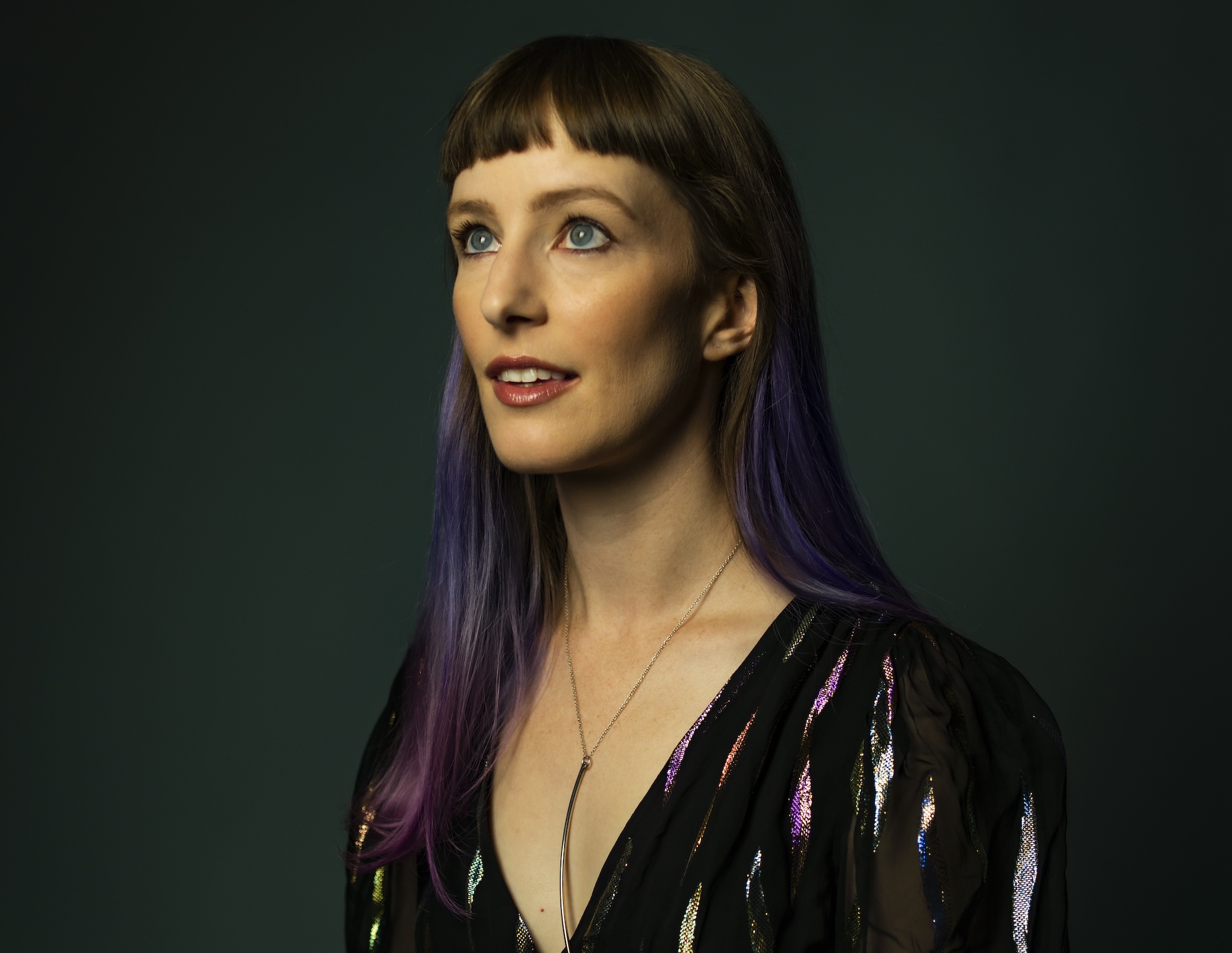
Die kanadische Sopranistin Charlotte Mundy ist dafür bekannt, dass sie bei der Aufführung zeitgenössischer Musik leidenschaftliches Engagement und eine kaleidoskopisch breite Klangpalette einbringt. Sie wurde als »Wagemutige mit unerschütterlichem Rückgrat« (SF Classical Voice) und als »faszinierend« (New York Times) bezeichnet. Zu den Höhepunkten ihrer Spielzeit 2026/27 zählen die Weltpremiere von Bára Gísladóttirs »Good Vibes Only« an der Deutschen Oper Berlin, die Weltkonzertpremiere von Suzanne Farrins Oper »Macabéa« im Miller Theatre in New York City sowie fünf szenische Aufführungen von Steve Reichs »Music for 18 Musicians« in der Park Avenue Armory in New York City.
Als Mitglied des TAK-Ensembles und des Vokalensembles Ekmeles wird Mundy in der Schweiz, in Lettland, den Niederlanden, Deutschland und in Montreal auftreten. Zu ihren jüngsten Projekten als Solistin zählen die ortsspezifische Oper »Newtown Odyssey« von Kurt Rohde und Marie Lorenz, Uraufführungen von Konzertwerken von Alyssa Regent und Aida Shirazi, eine Tournee mit Morton Feldmans »Three Voices« sowie die Premiere eines neuen gemeinsamen Multimedia-Projekts mit Christian Quiñones.